
Helping business owners navigate sourcing, market entry, and doing business the Chinese Way.
George Jaeggi has a background in finance and operational management. Through Halten Management Services, he helps business owners evaluate their business model and assess the possibilities of sourcing from China, or transferring parts of their operations to low-cost regions including China. His book, A White Man's China, draws on 18 years and more than 50 trips across the country.
Practical, experience-based consulting for businesses at every stage of their China journey.
Finding and vetting reliable Chinese suppliers and factories, from first RFQ through plant visits and quality control.
Navigating China's regulatory landscape, from company structure (JV, WFOE) to contracts, IP protection, and local counsel.
Practical guidance on Chinese business etiquette, negotiation norms, and workplace culture.
Assessing where and how to establish a China presence, including location selection, costing, and building the right local team.
George is available to speak on doing business in China — for corporate events, panels, and workshops, drawing on 18 years and 50+ trips to China.
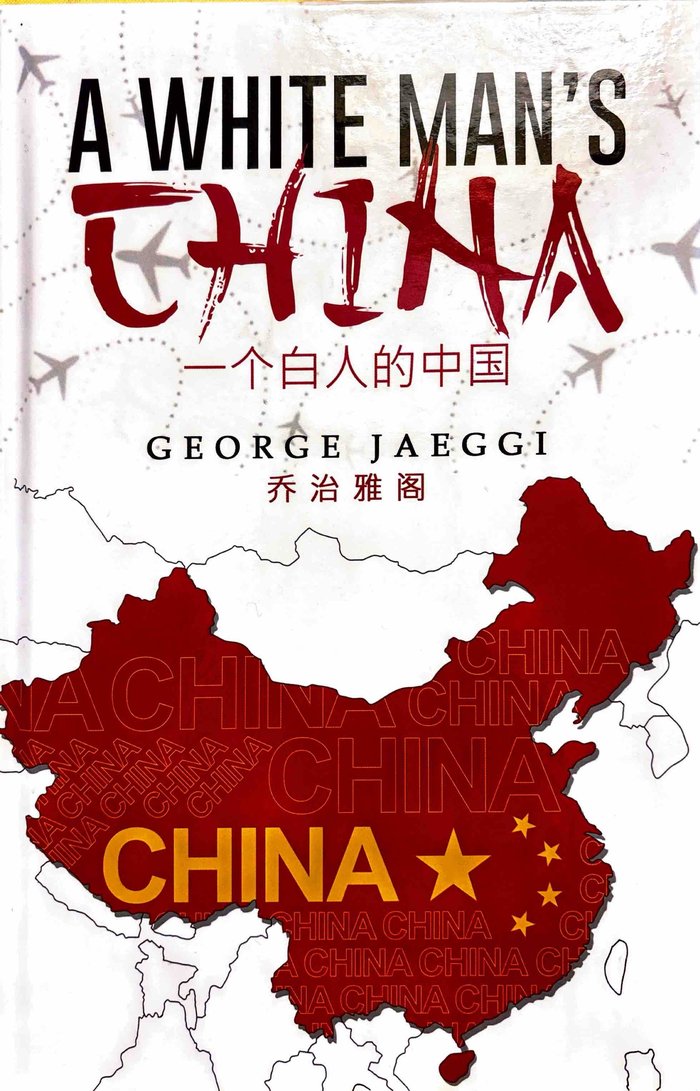
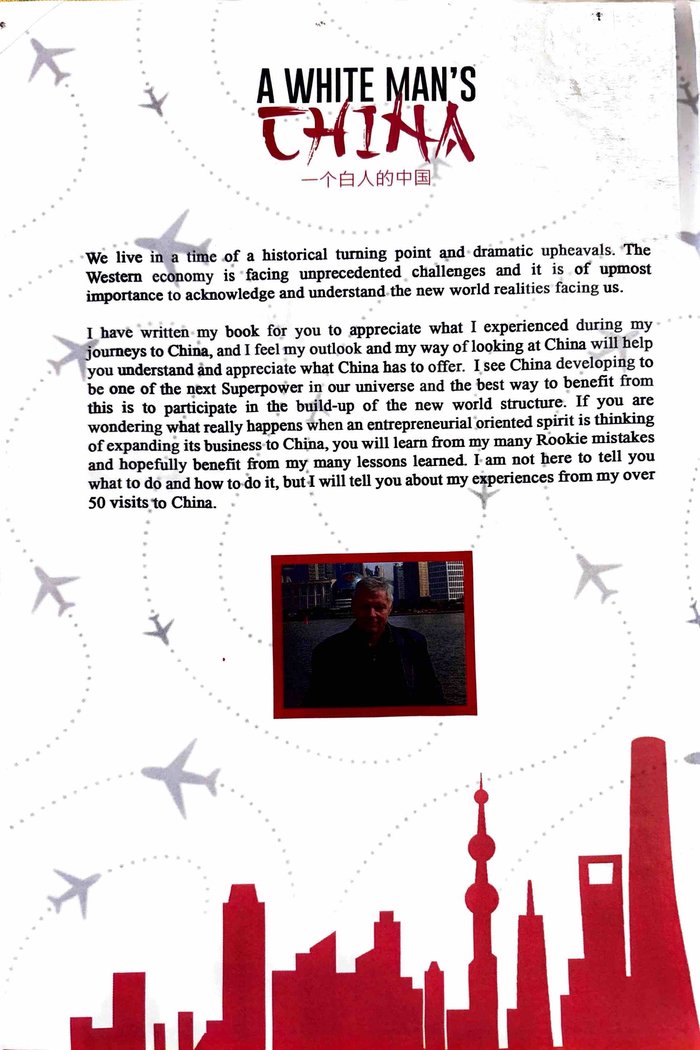
A White Man's China, by George Jaeggi — the knowledge gained from 18 years and 50+ trips to China, for major corporations and everyday readers alike.
For speaking engagements, workshops, or panel discussions on doing business in China, get in touch.
Contact us to bookEight real-world lessons from doing business in China. Click any title to read.
I have been in China….I know China….I hear these words many times and when I ask a few questions, I realize that I am talking to a “tourist” even if he pretends to be a “business” man. Visiting China and actually doing business in China are two different things. A “tourist” will be guided to see the beauties of China and be guarded against the true picture of mainland China. The same applies to a visiting “business” man who is purchasing goods from China. He will be protected to see just what the Chinese supplier wants him to see. Most of the time he will be chauffeured around to all the touristy places, he will stay in a 5-star hotel, eat Western style breakfast and get treated to first class Chinese restaurants for dinner. The “business” part of the trip will be spent in elaborate offices and he will attend the obligatory tea ceremony in the boss’s office. Then they walk you through the production and quality control area and all looks very
impressive the first time you see this. The working people wear nice uniforms and smile when a visitor walk around the plant. They all look so happy and content, but don’t believe for a minute that this is not all staged for the visitor who comes here to spend his money. Of course the largest obstacle is the language. Very few people will speak English and the ones who do are difficult to understand. If the company does much business with the West, then they have 1 or 2 employees who speak English, but most people hire a temporary interpreter, who has no idea about the business and any question you ask will be translated and answered in a manner which makes it clear that the interpreter had no idea what your question was. Just because a Chinese answers your questions with a positive yes, yes, yes….it does not mean that he even understood your question. A Chinese will not admit that he did not understand, as this would show a weakness and he does not want to lose his face (an expression which is a reality, but not understood very well by Westerners) Depending on the importance of the visitor, he will get the best treatment based on his contribution to the business and the prospect
of future and additional business. All such “business” visits are carefully staged and well designed to keep the visitor happy. Don’t be fooled by pricing alone. You may be able to save much money with purchasing goods from China, but you may not get the benefit of the “true” savings which your competitor may get if he is willing to tackle China business on a direct basis and not through well connected middle men and jobbers which use Alibaba to attract customers. You pay a heavy price penalty and there is no quality guarantee, as you are not in control how the products are contracted. What you see may not be what you get. I had many discussions with Business people who have used China suppliers. They complain about reliability and quality. I always ask the same question: how much are your savings compared to if you produce or purchase locally? If the answer is more than 60%, then I always suggest that they renegotiate at a higher price, but with stringent conditions on material usage and quality inspections. I had an owner of a tooling shop purchase multi- cavity tooling molds for plastic parts. The best local quote he received was $40,000 and his
calculation for producing this mold in-house at his shop was around $30,000. He received a China quote for $12,000 based on his drawings. He told me that he appreciated the savings, but when the tools got here, he had to spend a lot of time adjusting and the tools need maintenance on a much more frequent basis than the local tools. I suggested he asks the China supplier to quote based on your tool material specifications using Japanese or even German steel instead of Chinese steel. The quote came in at $15,000 which still was a 50% savings, but which required very little extra cost for maintenance compared to local material. I met the tool shop owner the other day and he tells me most of his problems with the China supplier are solved and only when he gets greedy and goes for the cheapest price he gets burned and human nature will once in a while go for the quick buck and overrule common sense. In my next case study I will give you some statistics about costs of doing business directly and what you have to watch for in order to get a fair shake in your China dealings.
A major misconception is the assumption that everything in China is cheap. It really depends on your taste and willingness to adapt, but most foreigners will want some familiarity with what they expect to get. This applies from food to clothing, accessories, electronics and other personal items. No matter if you are a tourist or a seasoned traveller, you will run into this problem over and over again. In the major cities like Shanghai or Beijing you find English speaking sales personnel in hotels and large department stores and in these types of places, there are set pricing policies and bargaining is frowned upon. All the brand names of clothing, watches, handbags etc. are priced at levels well above Paris, London or New York and the stores are filled with Chinese people lining up to get the latest Gucci or LV bag at prices
Everything well above a regular workers monthly income. However when you wander around on the main shopping street, you will encounter many people who will tell you about the” bargain” stores. There are at least 3 levels of these “stores” which are based on quality and price and depending on your taste and willingness to accept lesser quality goods, you can find great bargains from scarves, ties, shirts, wallets, bags, shoes and all kinds of electronic equipment. When you accept to visit such a location, you will be guided into alley ways and enter a building with long hallways, steep stairways and eventually you find the “special room”. As all these places are illegal, you cannot expect that there is a refund policy in place…..but there are also many small legit stores around and there you can bargain for discounts as most items do not have a price tag. As a tourist they will quote you a price well above its value and as a novice bargainer you may think that you got a great deal with the 25% discount you negotiated. Unless you are in a hurry and really want this particular trinket, never mention a price, as they may accept and you can then not change your mind, as they
consider the price you mentioned as a contract and they will hold you to it. It is not worth to get involved with the authorities over this and you will lose most of the time. Offer 15-25% of its original price and then let it ride and see how low they will go. Start walking away and if your offer was reasonable you will get to buy it at your price or at least close to it. Your interpreter may be with you while shopping and he may tell what kind of great bargains there are and afterwards he will collect a nice commission from the store owner. Beware of being ripped off! Now that you have the shopping part behind you and you feel that you made great strides in understanding how the Chinese economy work, you are now ready to tackle the real reason why you are in China…Business! No matter what kind of business you are in, you will need to connect with local manufacturers and suppliers of the goods you are looking for. Unless you have some connections already, there are agencies who will arrange meetings for you and drive you around and even provide an interpreter for the day. Try to visit about 3 suppliers who offer similar capabilities a day and explain to them what you are looking for and listen to their proposals. They will show you their quality room filled with samples of past and current production. Ask for quick ball park pricing on some of the items you see and you will notice quickly
how competitive they are. Most will refuse to quote any pricing and this should raise red flags for you. They like to play the same game with you like the store owner who just dropped his price to 25% of his original quote. Never give away what price you would accept. Let them give you the best price possible and then tell them that you are on your way to visit the next supplier. I assume you know your business and you understand the manufacturing process and the competitive pricing in your country. If the process is heavily labour oriented, keep the following in mind: Shanghai minimum wages for 2016 are 2220 RMB which is about USD 341 for 160 hours which translates fully costed including social benefits to about USD2.80 per hour. Now compare this to your own cost structure in your factory. Also keep in mind, that Shanghai has the highest minimum wages and highest social costs in China. Some provinces in the interior like Hubei, Henan or anywhere north of the Yangzi River will have minimum wages at close to half to the Shanghai wages. There will be extra costs for transportation to the sea port, however depending on volumes, this difference can be insignificant on the overall costs. In my next case study I will talk about the different manufacturing locations and the pros and cons to consider.
Let us assume that you are a businessman, either an owner or top manager. You know your business inside out and you hear that your competitors are outsourcing their production to China. Your margins are getting squeezed and your customers are comparing your pricing against your competitors. Your latest RFQ for a replacement job was returned for a requote. Your customer likes your quality rating of 0 PPM and he wants to give you a second chance at the business, but he tells you that your labour and overhead rates were not comparable to your competitor quotes. This job represent about 20 percent of your business and if you lose this work, you have to lay-off 15 staff and your remaining jobs will become less profitable due to the increased overheads.
is the Big If at this point you do not have an Activity Based Costing System, you should take immediate steps to implement this and then you can make an educated decision about your future. Based on the true cost of your production, it will help you to justify your next move. This also is the time where you need to adjust your business plan for your local banker or financial partner. You have a few options: stay the course and reduce the business volume, outsource some of your production or produce certain parts of your business in a low-cost country. Either way, you may need financing support to act upon your chosen path. If you decide to do nothing and let the business reduction take effect and wait until the business climate changes, the viability of your business may be questioned. Based on your ABC costing breakdown, you may be able to justify an investment into an expansion project in China. Requote your replacement job to your customer based on China costs and ask your customer permission to ship Chinese produced parts which are totally under your control. If the
price is right and based on your past quality record, you may get this job awarded to you and you can start your “China” venture. Now, where do you start? First check out where your competitors are producing or out- sourcing their parts to. If this information is not easily available, ask your suppliers if they also supply your competitors and they will tell you stories, how they switched their supply base once they moved their production to China. Your suppliers probably know exactly what is going on in your industry. Next, decide what kind of China set- up you want. There are many different forms of companies you can establish, such as a contractual joint venture (JV) with a local Chinese company, an equity joint venture (EJV) with a local Chinese company or a wholly foreign owned enterprise (WFOE). Then look around for an appropriate location. Most people start looking around the Shanghai area, which has the biggest and most experienced labour pool, but also the highest minimum wage scale. Surrounding provinces, such as Jiangsu, Zhejiang, Jiangxi or more to the interior like Hubei, Henan or Northern provinces such as Jilin or Hebei. However
always keep in mind the climate of China. Northern provinces have very long and cold winters and the transportation may become an issue, interior and more in the Southern provinces like Fujian, Hunan and Guangdong have summers with temperatures above the mid 30’s with very high humidity. In China factories, air conditioning or heating is unheard of and workers demand heating bonus above 35 degrees and in the winter they wear heavy coats and especially heavy gloves may impede the quality of your parts, depending on the difficulty of assembly of your products. At this stage you have to consider now a recon mission to China. Decide on 2 or 3 cities you would want to visit and arrange with an agency to show you around. Visit companies who produce similar products like your company and look around if simply out- sourcing or actual production is to your best interest. Make it clear that you may be looking for a JV partner and you will get the attention of the Chinese entrepreneurial companies real quick. In my next case study we look at the political side of issues you encounter once you decide a move your production to China.
It is said that China is the new Wild West….check out any old Western movie, where the Gunslinger, the Sheriff and the Judge are the only law in town and you get to know the meaning of the new China. The Chinese laws are centrally controlled by Beijing and by very few Party Officials. Most of China is ruled by local independent government officials. Their decisions are far reaching and binding to the general public and very difficult to understand for outsiders. Power is in the hands of very few and for getting anything accomplished in a reasonable time you need to understand the rule of the game. The local government officials have very little opposition and a great deal of authority. A clear sign, that you will not get your way is the Beijing excuse and the great wall the officials can hide behind. Of course there is no Beijing that will get involved in minor decisions, but it is an indication of other options you may have
and Politics to pursue and that is where you have to make quick decisions. Should you feel that you want a more detailed explanation over any decision, you quickly will hear the words that they will have to check with Beijing or that a “friend” of the government will offer his services. If you are stuck and really need some answers, this is a quick way to find out what it takes to get things done. He will guide you step for step what you have to do to achieve your goal and the fee you have to pay for his services will be well worth it if he really has the connections he boasted about. Put a deadline of your request with payment after completion and you may get smooth sailing for a while. On the other hand, there will be many people approaching you and tell you stories about how they helped foreigners to do business in China and how you can take advantage of officials with a little bribe. Stay away from these hustlers and never openly offer a bribe, as they will use this against you and threaten you if you should stop using their “services”. The best way to get things done is to ask the government official if they can recommend a consultant who can help you prepare all the
documents you need to submit. They will be happy to recommend someone and then you can be assured that you will get the best possible service. Know exactly what you want to achieve and be specific about the timeframe required. There will be quickly hints about meeting with committee members and lunch or dinner would be very suitable for such meetings. Depending if you know the area, it probably is a good idea for such a meeting at your hotel. The setting will be in a large room with a round table which can seat up to 20 people and no matter who you invite for this “meeting”, each seat will be occupied. You will sit opposite from the door and the person you invited will sit on the right beside you. If this person does not speak English, you will need an interpreter on your left in order to have a conversation during the meal. Leave ordering the food to your guest or your interpreter who will make arrangements with the serving personnel as most places have set menus for such gatherings. Drinks will be either beer or mao-tai, a high percentage alcohol rice wine. Cheers are compulsory in China, but on an individual basis and best is to understand the meaning of “gan-bay” real
quickly and how many “gan-bays” you are able to absorb. Try to offer this to your “important” guests only and when other people come over just do a small sip with them. The percentage of this drink can go as high as 62% and if the quality is poor, your head will feel it real quick. Chinese people love to see Westerners getting drunk and they will insist that you keep drinking and of course they also will keep drinking and keep in mind that their tolerance for alcohol is usually quite low. Said all that, the dinner will always be an experience as you will see dishes which cannot be classified in any category the way we know Chinese food. I will talk about the food etiquette in more detail in later sessions. Once the meal is over, most people will simply leave and only your guest will actually say good bye to you. You will not know if it was a successful meeting until the day after, when you will get the answer how you are progressing with your project. Always assume that all went well. In my next case study we look at the kind of team you need to build around you in order to succeed and some rookie mistakes to avoid.
Your glowing business plan will do little for you if you cannot build a solid team around you. You may be able to convince your banker or financial partner, but words are one thing and actions are another and as they say “actions speak louder than words”. First off, know the capabilities of your current staff and do not overestimate the willingness of your local people to make this venture a success. Expansion and especially expansion in the Far East can be a very intimidating task for your staff and their fear of failure is real and can become a handicap which is hard to overcome for them. Some will be enthusiastic for the adventure aspect in going to China, but as soon as the novelty wears off and the “real” work begins they will find every excuse why they cannot continue.
and Avoid You need to surround yourself with a few experts, some local and some in China and when I say local, it does not mean that is has to be current staff. Key at your home plant will be an experienced Plant Manager who understands your business inside out and who is willing to competently train new people. This person has to be willing to work onsite for a few weeks at a time and transfer his knowledge to local Chinese personnel. Since your products are unique, it would be difficult to hire in China someone with these skills. In China you will need a local lawyer, who is experienced dealing with foreign companies and you will need an office manager who can overlook the bookkeeping, purchasing, invoicing and personnel issues, a production manager, experienced in machine set-ups and basic understanding of tool maintenance and a competent TS or ISO certified quality control manager. English knowledge will be a requisite for the lawyer, office manager, production manager and quality control manager. Your lawyer should be a local person with good connections to the
labour department, the police and the communist party officials. The lawyer will also arrange an interpreter for you when attending government functions, dinners and general business meetings with potential suppliers. Make sure that your company has the image of a Chinese company, as the regular employees will demand higher wages if you show off your proud Western heritage. This brings me to the rookie mistakes and the hard lesson a company had to go through. This was a successful mid-sized company with plants in multiple countries and the owners decided to expand to China in order to take advantage of the low-cost manufacturing everyone was talking about. Their business plan was presented to the local bank and a budget was approved, which included building a factory and move partial production to China. The announcement in their head office location was applauded and through a friend of the owner, they contracted an entrepreneur living in China and this was a great way to get started. After a visit in China, it was decided to buy land and build a factory. The costs seemed reasonable compared what such a building would cost in their hometown. Little did they know that the cost were double of what a Chinese company would have built. Yes the
quality may have been better, but it was not worth the extra costs. Being a proud Western company, they started hiring people with English knowledge for most of the office and managerial positions. Even the receptionist was fluent in English. Instead of paying 3-5000 RMB per month, her wages were above 10,000. The same with engineers whereas a Chinese speaking engineer would get 6-8,000 and with English 15-20,000 and so it went with most positions and overheads went out of control. On top of this instead of having support of 1 production manager from the head office, they brought in on average 4 to 5 workers on a monthly basis to support the new company. The regular workers all saw this and since this was a Western company, they demanded higher wages. Compared to the head office wage calculations, this was still reasonable, but little did they know that the competitors who produced in China were way more competitive and the money they thought they saved with this move was squandered on extravagant procedures which were way out of line for China. Needless to say that the company closed down after 2 years and never was able to acquire any new business within China. In my next case study we look at the “Chinese Way” of doing business.
I heard this phrase over and over again from my Chinese colleagues…… “You have to learn to do Business the Chinese Way”….you don’t understand the “Chinese Way”….this is China and you have to learn business the “Chinese Way” What makes sense to you, unfortunately does not make sense to a Chinese. I often wondered why our way of doing business is so different to the “Chinese Way”. China is a new entrepreneurial country and the young people are adapting to our way of life, but the older people who grew up under the strict communist rule and education are now free to experience the lawless society with their own rules. We may call this corruption, but the Chinese see it more like a cost of doing
of doing business. People in power have all the cards and demand respect through “special favours” and it is quite normal that your manager will get a contribution from his workers on a monthly basis for having you work for him. It is something like a union due and it assures the workers a fair treatment. As a foreigner, we will never know this, as this is all cash under the table money and nobody will come forward as this seems to be an acceptable practise. The same goes for your suppliers, but will deal with this in further case studies. Chinese workers are very good workers, as anyone employing Chinese workers in our Western culture can contest. They are very proud workers and want to do the best job possible for the company. However in China, some colleagues tell me that the productivity is at very low levels compared in the home factories. Since the wages are very low, they discount also the work expectations, but this is a grave mistake. I was told that a Chinese worker will produce at about 60% of a Western worker and when we started production, which was a direct transfer from our
home production, I observed the workers and they took their time to produce the same parts. Then I took a video from our home factory with a Vietnamese worker doing the exact same job and I asked them why a Vietnamese worker in the West can produce 40 to 50 percent more than a worker in China? The answer was surprising to me…the Vietnamese worker has to work harder because they come from a poor country and need to work twice as hard than a Chinese worker. I asked what it would take to produce here at the same level as in our Western factories and again the answer was simple.....how much bonus we get if we produce at the same level? My answer was that the bonus is that they still will have a job after the 3 month probation period and as long we are competitive and get new jobs. One older worker who had a nephew working for us asked for the quota required and she produced at that level the following day and so did her nephew who was just 19 years old. I promised them a bonus of 10 RMB (about $1.60) a day if they produced to the quota with 0 rejection. It took less than a week and our overall production was above 100% to our Western factory production. When I talk about the low wages, there are other benefits which are of importance and
expected from the workers. After 4 hours work a meal has to be provided for all employees. We would cater the food in at about 6 RMB (about $1) per meal/employee. Heat bonus about 10 RMB a day above 35 degrees, transportation to and from work from/to a central town location, as there is no public transit to our factory and an attendance bonus of 100 RMB per month if no missed days (missed days are deducted from the monthly pay prorated) and of course overtime pay or any hour worked over the mandatory 160 hours at a time and a half pay. So nothing is free and more dedication to the job lets a worker earn that little extra which makes them happy. A few days before the Chinese New Year there is a company party and all employees receives a gift and a cash bonus in a red envelope. As I mentioned earlier, there are different rules and attitudes in China and what seems not fair in our society is absolutely acceptable in China. You still can ask any question you want on the application form, such as age, sex, national status (if from minority of regular national) religious trend, if member of communist party, health issues. There are no questions off limit. In my next case study we talk about Sales the “Chinese Way”.
Now you have to examine your decision to start-up your production in China. What was the final push that made you decide? Was it to transfer your current production to a low-cost country and improve your margins? Was it to stay competitive with your competitors who try to take over your current or replacement business with offering lower costs to your current customers? Did your current customers demand that you sign you up for an LTA with givebacks as high as 4-4-4-4. You tell me how you can find 16% savings on your current production over the next 4 years? How does your competitor do it? The answer most likely is the location of the production and this applies to Europe as well as North America. There are certain areas which still can be competitive, but your customers do not care anymore where
of Sales in the production takes place as they are just interested in the lowest costs possible. Now you decided to start-up your production in China. You must be thinking that with a factory in China, you can also start selling your products for the China market. Looking around, you will find that your current customers also have factories in China and this should make it easy to get some business for you. Well this can be a very misleading way of thinking. You will find that your current customers and their business unit in China are quite separate and the Chinese management will mostly deal with Chinese suppliers only. The fact that you supply to their European or North American business units has no bearing on the decision the Chinese operation will take in regards to your business. I was at a meeting with FAW in Changchun and I was in the understanding that VW Wolfsburg has final say about any products being purchased for their Audi production. Just after we opened a production facility in Northern China, we arranged a meeting with FAW purchasing in Changchun to introduce our
new facility and asking to be put on the RFQ list for any new parts requirements. There were 5 purchasing agents and all were Chinese including the head of purchasing. He made it quite clear that purchasing decisions are made by him and not by Germany as this is a joint venture business. We made a presentation of our products which included some parts we supply to Audi in Germany and his reaction and comment was as follows: We have 3 very competent Chinese suppliers for the same kind of product already, why should I add you to that list? However there are still some Tier 1 companies which are controlled by their head office in North America and Europe, but even there you will run into the purely Chinese companies who supply products at a very low price. The only real advantage we could offer is engineering support, which is lacking by most Chinese suppliers. Now this was the easy part to contact transplant customers from Europe and North America, but how about to break into the Chinese market. First you have to find an experienced Chinese sales manager. This is not an easy task, as in every interview you will hear that they can do anything. Ideally the sales person should have an engineering background and speak English in order for you to make sure he can competently
represent your products. He will want a fairly high base wage and a commission on sales and quickly he will ask for a budget in special considerations for the potential buyers. Sales are achieved with relationships and special favours. This may not be too obvious for foreign transplants, but certainly for purely Chinese companies. It is quite common that a purchasing agent will tell you the percentage commission he receives from your competitors and his expectations should he consider your products. He will provide you with a target price and many salesmen will then offer to split their own commission in half and share it with the purchasing manager in order to get the business award. I realize we consider such tactics very unethical, however this is what you are faced with in China. If you don’t play along you will have no chance to acquire new business. The same goes with plant approvals, ISO or TS certifications. They are quite open in discussing how much extra effort they have to put forward for you getting a good rating and how much this effort is worth to your competitors. Well this is the “Chinese Way” of doing business in China. In my next case study we talk about the Chinese Way of purchasing and developing a supply base in China.
You have examined your business and you have decided to develop a Chinese supply base for your raw materials and even for assembly parts in order to cut down on your internal labour requirements. By now you know that labour costs in China are way lower than in your factory and this should reflect in overall savings for you if purchased directly from China. But how do you go about finding a reliable supplier? Should you search the internet? There are many websites promising you the best quality and price for China supplies. How about Alibaba? This is the largest eBay type site for any kind of products from China. You can open website after website and eventually you have to register with your email and ask for a quote for your products, however you will most likely be dealing with an agent who may not be familiar with your products and agents will promise you anything
even if they do not understand your requirements. Agents represent many different suppliers and there will be no guarantees that materials offered are being supplied to you from the same source, which could create many quality issues.
If you are really serious for purchasing high volume items from China, you will have to look for companies who sell directly from their factories to you. This will ensure you some sort of control over the quality of the products and you also will be able to do a plant audit to verify that they are certified to ISO or TS standards. How do you find these companies? Again, first check the internet and look for companies who supply your competitors. Chinese companies are quite proud to advertise that they supply Western companies and most companies do have an English site button on their website, but if they show offices outside China, they are most likely already “Westernized” and this will reflect in their pricing. A truly low cost Chinese company has most likely only 1 or possibly 2 English speaking employees and they will be your contact. Ask them to send you a customer list and some pictures of the products they currently produce and send them a RFQ (request for quote) and ask for timing to receive samples if you agree with their pricing. It is also a good idea to provide them with your website, in order for them to feel comfortable to deal with you. Depending on the current business climate of that company, you may be quite surprised if they refuse to offer you a quote, as many such companies have been tested by Western customers who have wasted their time in providing samples and then not receiving any feedback. I advise you, that if their pricing is not to your satisfaction to be upfront with them and thank them for the quote and do not insist on getting free samples. They will appreciate this and if in future you ask for another RFQ from them, they will gladly offer you their best pricing and maybe this time the situation is right to make a deal.
Once you have found a company that offers you the desired savings and they supplied you with acceptable samples, then place a first order. If the quality is as good as the sample, you may have found a good supplier. If the yearly quantities and achieved savings are substantial, now is the time to consider a plant visit in China. As earlier discussed, relationship building is expected in China and if you master this art, it will bring you much dividends in the future. When visiting China, keep in touch with all contacts you have done business with, even if you never actually purchased anything from them. They will appreciate your effort to get to know their company and it will make it that much easier to communicate with them in the future. Do not forget to bring along some small promotional items from your company or small souvenirs from your country, as most companies will present you with some sort of gift, tea being the most popular item.
In my next case study we review my first 8 articles and how to build long-lasting business relationships
Response & Update 1 — replies to case-study questions
My blog is intended to be a 2-way conversation about business practices in China for foreigners who try to tackle the “China-Solution” by themselves. I try to give you some insights on the good and not so good experiences you may encounter. If you are representing a large corporation with an extensive budget, then this blog may make you chuckle, as with money many of my struggles could have been avoided. With unlimited funds at your disposal, you would hire consultants for every detail and you would follow a very standard and safe route to building your China business. Your end goal of having a presence in China, may it be for manufacturing, distribution and/or sales could be achieved without much interference from external forces, as money goes a long way in China and if you compare your China business with your current operation from your home country, you may be satisfied with the savings achieved.
However if you try to build a company on a shoestring budget, every dollar spent will be crucial to your success. You have to quickly recognise if any decision you make is in your best interest or if it simply satisfies your “business advisors”. The end result has to be a quick return on your investment, as in China the business climate could change in a heartbeat. You will be bombarded with “good advice” from many sources and you have to be careful to be conscious of the pitfalls of trusting people too quickly. The few English speaking Chinese you’ll meet will be out to impress you and of course their endgame is getting your trust and for that matter…your money. They will know that initially the time span for making money is very short and they will try to convince you to hire their friends for all kinds of functions and eventually you start depending on a slew of people around you which just know one thing….money. Westerners are known to have money and once you are committed it is not easy to turn back.
Stay away from open bribes….you will be told that everybody is doing it and to a certain degree this may be true, but bribes lead to corruption and blackmail. Never ever forget that China is a dictatorship controlled by a few party insiders and most Western people are very inexperienced to understand the meaning of this and how it may affect their business decisions. A bribe to the wrong person may have dire consequences or at the very least is a waste of money and effort. Do not believe that money spent will lead you to the Garden of Eden, however to build a genuine friendship with your Chinese connections is of upmost importance.
I have interviewed hundreds of Chinese for various positions and you have to be able to read between the lines about their true intentions. The basic Chinese resume is laid out in the same format we were used to in the West 30 years ago. There are currently still no taboos and you can ask any question you want about their family, heritage, age, religion, party status and even attitudes towards Western society can be discussed. As in any interview, education will be of your most important interest, as well as the previous positions held and achievements. Don’t be afraid to interrogate them and see their reaction to uncomfortable questions…..always base your decision on the loyalty factor they show towards their past employers. Getting references is not an effective tool for various reasons, unless you can get a name from a Westerner they actually worked for. This is the most effective way to hire for any position from supervisor and above, but be aware of the pay scales in China for any managerial position. Do not compare with your home company, as you may over or underpay your Chinese staff. If you pay too high wages, word will go around quickly and then even your regular production workers will want higher wages and do not flaunt the fact that you are a Western company as you will pay dearly for every service you will require.
Halten Management Services
195 Deerfield Rd, Suite 514
Newmarket, ON L3Y 0G4